What Versilia is, and who it's for
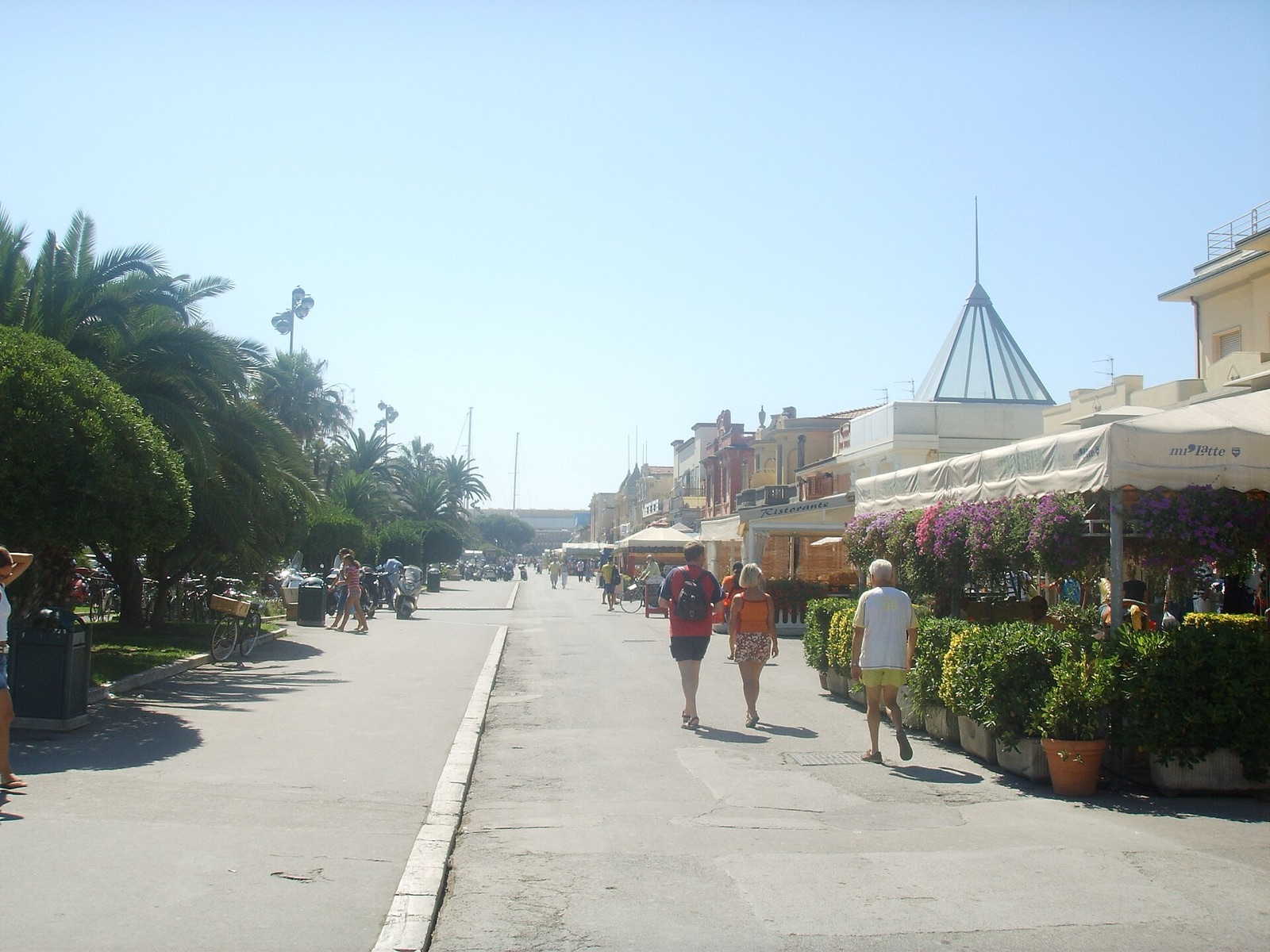
Versilia is one long sandy beach running from Viareggio to Forte dei Marmi, by way of Lido di Camaiore and Marina di Pietrasanta, with the Apuan Alps rising steeply a few kilometres from the sea. Further north, beyond Massa, lies Carrara with its quarries. It is the easiest answer for anyone looking for Tuscany's beaches from Florence or Pisa: you can get there by train, and each town has a different character.
In short, what to book:
- In summer: a beach club, if you're going in August. In other months you usually don't need to.
- In Carrara: a quarry visit, in a tunnel or by jeep. On weekdays in April, May, September and October the MarmoTour must be booked.
- In Torre del Lago: tickets for the Puccini Festival, in July and August.
- Between late January and February: a parade at the Viareggio Carnival, ideally in the stands if you want a seat.
The towns, from south to north
| Town | Why go | Train from Pisa |
|---|---|---|
| Torre del Lago Puccini | Lake Massaciuccoli, Puccini's villa, the summer festival | 12–14 minutes, €3 |
| Viareggio | the Carnival, the seafront promenade, the liveliest town | 13–28 minutes, €4.10 |
| Pietrasanta | historic centre, galleries, works by Botero, marble and bronze workshops | 28–31 minutes, €5.30 |
| Forte dei Marmi | the smartest and most expensive resort, the pier | 32–36 minutes, €5.30 |
| Carrara | the marble quarries, Colonnata and its lardo | 38–51 minutes, €6.60 |
Torre del Lago Puccini
Giacomo Puccini lived here, on the shore of Lake Massaciuccoli, and his home is now the Villa Museo Giacomo Puccini: check opening hours and tickets on its website before you go. In summer, normally from July to late August, the Puccini Festival stages his operas in the Gran Teatro all'Aperto, the open-air theatre on the lake: Turandot, Tosca, Madama Butterfly, La bohème. Tickets are sold through the Vivaticket network listed on the festival's website. There is a reciprocal discount between the festival and the Puccini Museum in Lucca, the house where he was born.
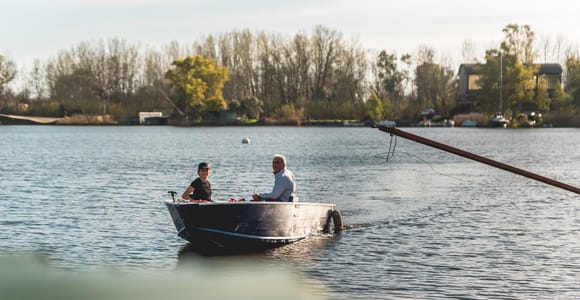
Between Viareggio and Torre del Lago, the Migliarino, San Rossore and Massaciuccoli park protects a stretch of coast and marshland. You can also explore it by boat:
Viareggio
It is the town of Versilia, more than a seaside resort: a long seafront promenade with Art Nouveau buildings and historic cafés, the harbour, the avenues. And above all the Carnival, described further down. Out of season it's worth seeing the Cittadella del Carnevale, where the floats are built in sixteen hangars, with the Carnival Museum (a ticket of a few euros, free under 11 with an adult). The Cittadella is closed on Mondays and Tuesdays; on parade days it only opens in the morning.
The town also has Puccini's Villino, run by the Fondazione Puccini, with guided visits.
Pietrasanta
A historic centre founded in 1255, with a wealth of art galleries, marble workshops and bronze foundries: a town that lives off sculpture.
Fernando Botero had a studio in Pietrasanta from 1983. He died in 2023 and is buried in the town cemetery beside his wife, Sophia Vari. Several of his works can be seen around town; the most often mentioned are the bronze Il Guerriero (The Warrior) in Piazza Matteotti, the frescoes of the Porta del Paradiso and Porta dell'Inferno (Gate of Heaven and Gate of Hell) in the church of the Misericordia, on Via Mazzini, and the models kept at the Museo dei Bozzetti in the former convent of Sant'Agostino. Ask locally about opening times for each place. In the squares you'll also find works by other contemporary sculptors, including Mitoraj, Cascella and Folon.
Forte dei Marmi
The most exclusive side of Versilia: villas, shops, and beach clubs with the highest prices on the coast. In the main square stands the Fortino, the Leopoldine fortress of 1788, and on the seafront the pier. The market is on Wednesdays, and in summer usually on Sundays as well. The station, Forte dei Marmi–Seravezza–Querceta, is inland, about two or three kilometres from the beach.
The Viareggio Carnival
It is one of the oldest and largest carnivals in Italy, dating from 1873, and famous for the giant papier-mâché floats that parade along the seafront avenues. Its emblematic mask, Burlamacco, was designed by Uberto Bonetti in the early 1930s.
When: between late January and February, with about six masked parades at weekends plus Giovedì Grasso and Martedì Grasso. The exact calendar is published each year on the official website.
Tickets: at the last edition a single parade started from €16.50, with a special price for Giovedì Grasso; there was also an "Open" ticket valid for one parade of your choice, supplements for the stands, a package with a numbered seat in the central stand on Piazza Mazzini, and a season ticket for all the parades, cheaper when bought in advance. Prices for the next edition should be checked on the official website; the ticket office is at the entrance to the Cittadella.
The Carrara marble quarries: tunnel or jeep?
Carrara is still in Tuscany, on the border with Liguria, and its quarries are the reason to come this far. Carrara-Avenza station is down on the plain, several kilometres from the town and further still from the quarries: without a car you'll need a bus or a taxi. The two options are quite different.
MarmoTour, inside the mountain. At the Fantiscritti basin, in the Ravaccione quarry, you go into a marble tunnel that is still being worked: a three-minute minibus ride, then a visit of about 45 minutes over 400 flat metres, suitable for pushchairs, wheelchairs and dogs too. Inside it is 16 °C all year round: bring a jacket. They provide the helmet.
| MarmoTour | Price |
|---|---|
| Adults (18 and over) | €15 |
| Ages 12–17 | €10 |
| Ages 6–11 | €5 |
| Ages 0–5 | free |
The season normally runs from late March to early November. Booking is compulsory on weekdays in April, May, September and October and recommended in summer, via WhatsApp or email. At the Fantiscritti entrance payment is cash only; at Ravaccione you can also pay by card. Motorbikes and scooters are not allowed. Visits are in Italian, English, French and German.
By jeep, in the open air. The off-road tours climb the roads of the open-cast quarries, with views over the Apuan Alps and often a stop to taste lardo di Colonnata, the IGP cured pork fat aged in marble basins in the little village above Carrara. They cost more and last longer. Partner prices change, and we check them regularly.
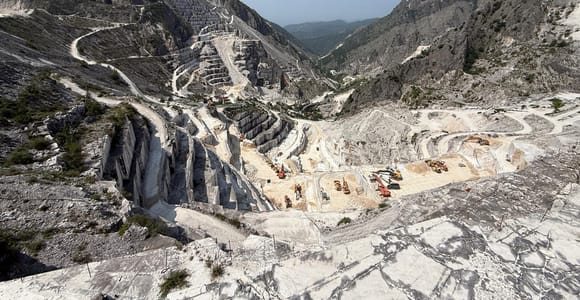
Carrara marble quarries with lardo tasting: Quarry tour in an all-terrain vehicle
(879 reviews) from €69
Book on GetYourGuide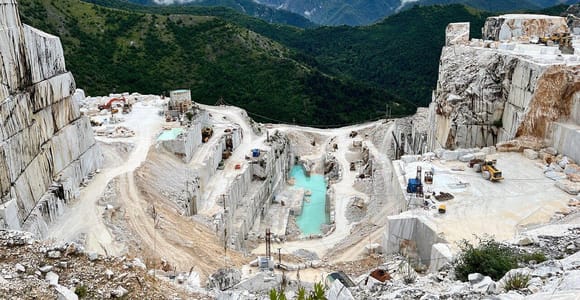
From Carrara: Marble Quarries Tour by Jeep and Lardo Tasting
(444 reviews) from €69
Book on GetYourGuide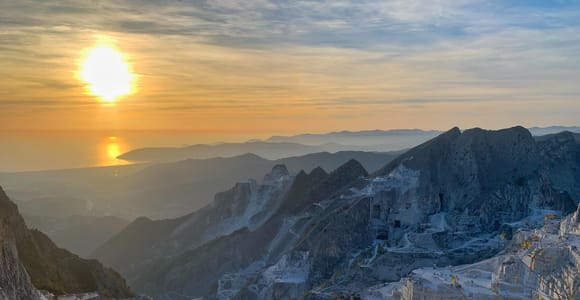
Which to choose: the MarmoTour if you want to understand how marble is worked inside the mountain, for little money and even with small children; the jeep if you want the views of the open-air quarries and the lardo. If you have time, they fit well into the same day.
Versilia beaches: beach clubs or free beach
The coast from Viareggio to Forte dei Marmi is taken up almost without a break by stabilimenti balneari, the beach clubs: umbrella and sunloungers for a fee, showers, a bar, often a restaurant. Stretches of free public beach (spiaggia libera) do exist, but they are few and small, usually between one beach club and the next or at the far ends of the resorts.
The most natural beaches lie at the edges. South of Viareggio, inside the Migliarino, San Rossore and Massaciuccoli park, the Lecciona is a free, natural beach; further south are the dunes of Marina di Torre del Lago.
There are no official figures we can give you on prices: they vary a great deal with the resort, the row and the month, with Forte dei Marmi at the top and August the most expensive month everywhere. Two practical rules:
- In August, book your beach club: it's the month when finding a spot is hardest.
- In June and September it is generally easier to find a spot even without booking.
Getting around
The Pisa–La Spezia coastal railway serves the whole area: Torre del Lago, Viareggio, Pietrasanta, Forte dei Marmi–Seravezza–Querceta, Massa and Carrara-Avenza. None of them is more than an hour from Pisa. From Florence there is a direct regional train to Viareggio via Lucca, about an hour and a half, €11.40; for the other towns you generally change at Viareggio or Pisa.
The stations are inland: to reach the sea you need local buses, a bike or a walk.
If you want to push further north, the Cinque Terre, already in Liguria, lie on the same line a little beyond Carrara.
- January: good
- February: good
- March: not recommended or closed
- April: not recommended or closed
- May: good
- June: best time
- July: good
- August: good
- September: best time
- October: good
- November: not recommended or closed
- December: not recommended or closed
best time good not recommended or closed
June and September are the best months for the sea: the beach clubs are open and there are fewer crowds. July and August bring the Puccini Festival but also the highest prices and the need to book. The Viareggio Carnival runs from late January into February. The MarmoTour tunnel is normally open from late March to early November.
Viareggio tours and experiences on GetYourGuide
Mistakes to avoid
- Arriving in Carrara on a scooter: motorbikes and scooters aren't allowed into the MarmoTour.
- Turning up at Fantiscritti without cash: cards aren't accepted there.
- Expecting to step off the train and be on the beach: the stations are a long way from the sea.
- Going to the Cittadella del Carnevale on a Monday or Tuesday: it's closed.
- Counting on a beach umbrella in Forte dei Marmi around Ferragosto (15 August) without booking.
Related pages
If you have an extra day, combine the coast with Lucca, on the railway line to Florence, or with Pisa. For more of the Tuscan sea, see the Maremma and the island of Elba. All the other ideas are on the day trips page.