Two destinations, one direction
Volterra and Elba seem to have nothing in common: a stone town on a hilltop, full of Etruscan urns, and an island of beaches and harbours. But they lie along the same route. From Volterra you head down to the coast at Cecina; from Cecina, along the Via Aurelia or on the Tyrrhenian railway line, you reach Piombino, where the ferries leave. It's a natural trip for anyone with a week in western Tuscany: two days on the hill, then the island.
What to book, in short:
- Volterra: the Volterra Card, if you're seeing at least three sites.
- Elba: the ferry, well in advance if you're taking a car in July and August.
- Napoleon: before you set off, check which of the two residences is open in the morning and which in the afternoon.
Volterra: what to see
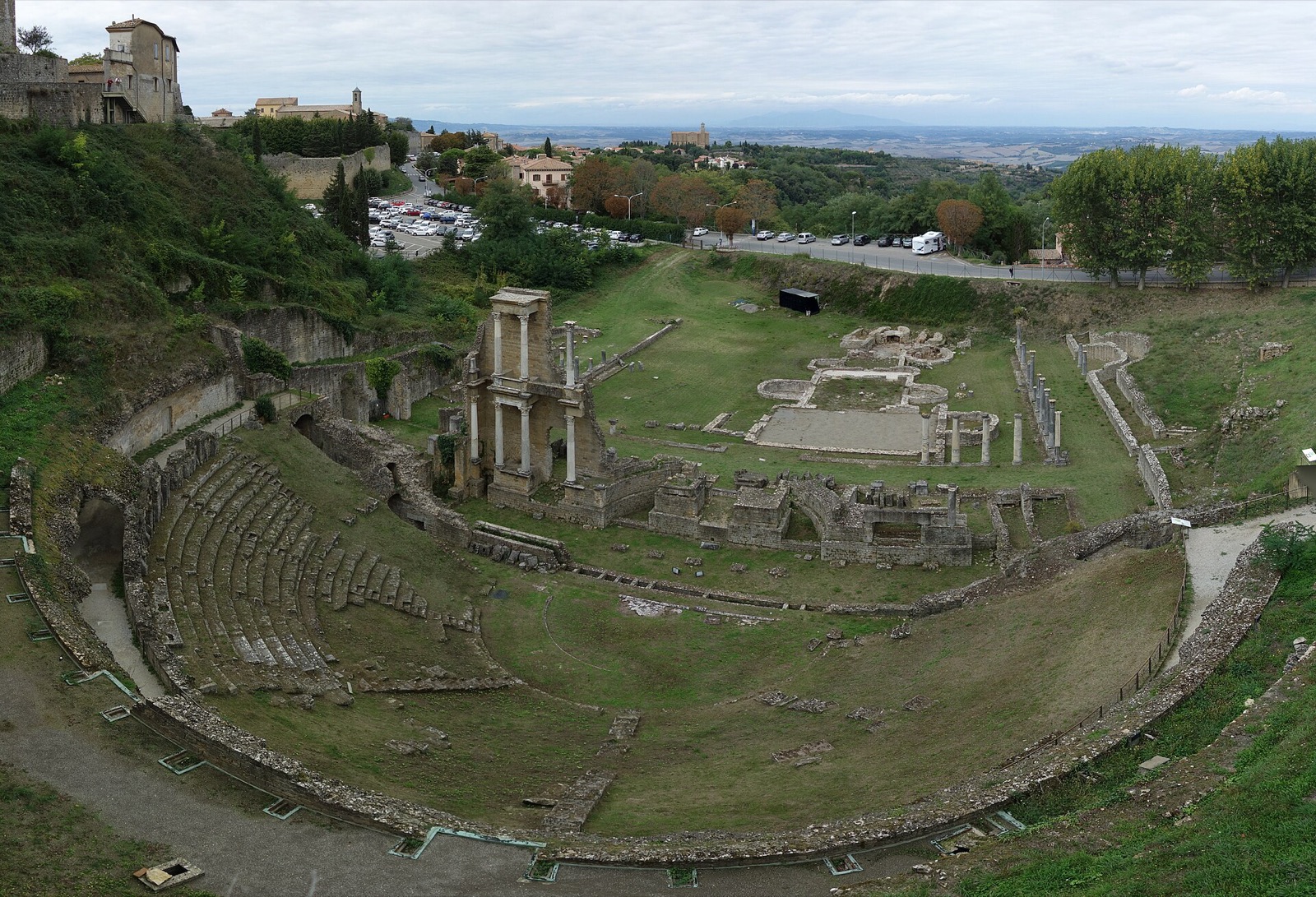
The Etruscans' Velathri, the Romans' Volaterrae, was one of the great cities of northern Etruria. It still shows: the Porta all'Arco is a gateway in the walls dating from the 4th century BC, and at the top of the hill, in the Parco Archeologico, are the remains of the Etruscan acropolis. Next to it stands the Fortezza Medicea, which is now a prison. On the edge of the town, the Balze are the great eroded cliffs of the hill.
The Museo Etrusco Guarnacci
It is one of the oldest public museums in Europe: it opened to the public in the 18th century thanks to the donation, in 1761, of the archaeological collection and library of Abbot Mario Guarnacci. At its heart are some 600 Etruscan cinerary urns in alabaster, tufa and terracotta, from the 4th to the 1st century BC. Look out for the Urna degli Sposi (the Urn of the Married Couple), in terracotta, the Ombra della Sera (Evening Shadow), a very long, slender bronze figure, and the stele of Avile Tite. The museum is on Via Don Minzoni.
The Roman theatre of Vallebuona
Built by the Caecina family between the late 1st century BC and the early 1st century AD, it only re-emerged from 1950 onwards, with Enrico Fiumi's excavations. Among the workers were patients from Volterra's psychiatric hospital, and a plaque records it. The entrance is on Piazza Caduti nei Lager Nazisti. Don't confuse it with the Roman amphitheatre, which has also been found in Volterra.
Alabaster
Alabaster has been worked in Volterra since Etruscan times and is still the town's craft: you'll see it in the workshops of the centre and in the Ecomuseo dell'Alabastro, devoted to this stone and how it is worked. It is included in the Volterra Card.
What about Twilight?
A clarification, because many people come for this. In Stephenie Meyer's novels Volterra is the home of the Volturi, but the film New Moon wasn't shot here: the "Volterra" scenes were filmed in Montepulciano, in Piazza Grande, in May 2009, after the production had looked at more than a dozen locations. If you're looking for the film locations, go to Montepulciano, which you'll find on the Val d'Orcia page; if you're looking for the town in the books, you're in the right place.
Volterra Card and tickets
All the municipal cultural sites have a single ticket at €10 (reduced €8). The Volterra Card covers them all for 72 hours.
| Ticket | Price |
|---|---|
| Volterra Card, full price | €23 |
| Volterra Card, reduced (ages 6–25, university students, over 65s, TCI and FAI members) | €18 |
| Volterra Card, family (1–2 adults with children aged 6–18, maximum 5 people) | €32 |
| Groups of at least 10 people | €12 each |
| Single site, full / reduced | €10 / €8 |
The Card covers the Museo Etrusco Guarnacci, the Pinacoteca and Museo Civico, the Ecomuseo dell'Alabastro, the Palazzo dei Priori, the archaeological area of the Roman theatre and the Etruscan acropolis. Free for under 6s. The maths is simple: from the third site onwards, the Card is worth it. Prices and opening hours are those on the official Musei di Volterra website; for information and bookings, the number is +39 0588 87580.
Opening hours, as a rule. From early March to early November the Guarnacci, the Pinacoteca, the Ecomuseo and the Palazzo dei Priori open every day from 10:00 to 18:30. In winter they close on Tuesdays, and on weekdays they close at 16:00. The Roman theatre and the acropolis keep their own hours and only open at weekends in winter.
Getting to Volterra
Volterra has no railway station. The one that bears its name, Volterra-Saline-Pomarance, is down in Saline, about 9 km away, and you get there from Florence via Pisa and Cecina with a connecting bus from Cecina: about 3–4 hours, €16.80. Then you need another bus to get up into town. It's not the easiest way.
- From Florence by bus: there is no direct line. You travel to Colle di Val d'Elsa and take Autolinee Toscane line 770 from there, 46 minutes to Volterra. Services are few: four a day from Monday to Saturday (from Colle at 07:00, 09:45, 14:45 and 18:25 on the current timetable) and just one on Sundays. Allow about 2 hours in total, and check the connections on the Autolinee Toscane website.
- From Siena: here too you change at Colle di Val d'Elsa and take the 770.
- From Pisa: bus to Pontedera (or train), then line 500 to Volterra; about an hour and a half in total, €8.90 from Pisa.
- By car: from Florence take the Firenze–Siena dual carriageway, exit Colle Val d'Elsa Nord; from Pisa the FI-PI-LI, exit Pontedera; from the coast the Via Aurelia, exit Cecina. The historic centre is a ZTL (zona a traffico limitato, a limited traffic zone where unauthorised cars are fined): leave the car in the car parks outside the walls.
Volterra pairs well with San Gimignano, a short distance away. Organised tours combine them in exactly this way, from Florence or from Siena, but they cost quite a lot: by bus or by car you spend much less. Partner prices change, and we check them regularly.
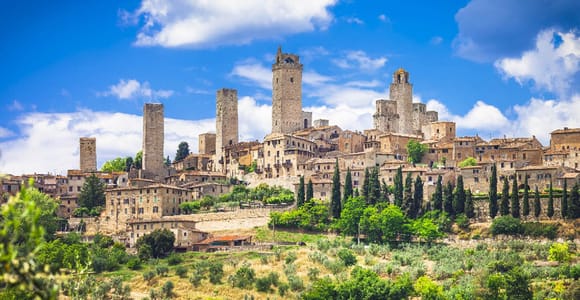
Florence: San Gimignano & Volterra Day Trip with Food & Wine
(58 reviews) from €309
Book on GetYourGuide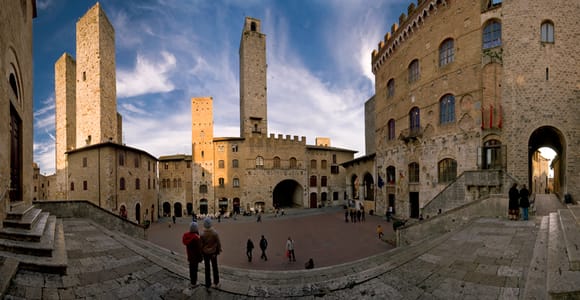
Volterra: Fresh Pasta Cooking Class at a Tuscan Farmhouse
(78 reviews) from €115
Book on GetYourGuideElba island: getting there
Elba is part of the Tuscan Archipelago, and you reach it by ferry from Piombino.
The ferry from Piombino
On the main route, Piombino–Portoferraio, Moby, Toremar and Blu Navy operate. Moby also sails to Rio Marina and Cavo; Toremar serves Cavo too.
- Crossing time: about 1 hour by ferry; about 40 minutes on the Toremar hydrofoil, foot passengers only.
- Frequency: from early morning to evening, with departures every 30–90 minutes in quiet periods and far more often in summer.
- Boarding: with Moby, 30 minutes before on foot and 90 with a car; with Blu Navy, 15 minutes on foot and 30–60 with a car.
- Prices: on foot you'll spend roughly €12–20 each way; with a car you'll spend a good deal more, and the fare changes with the season and the size of the vehicle. In summer, book ahead if you're taking the car.
By train from Florence and Pisa
From Florence to Piombino Marittima takes about 2 h 55–3 h 30, from €18.40 to €24.70: usually a train to Campiglia Marittima, then an Autolinee Toscane bus of about 20 minutes to the port. Only a few regional trains run directly to Piombino Marittima. From Pisa it takes from 1 h 18 to 2 hours, €13.20–14.90.
The handy trick: Trenitalia sells a through ticket to Portoferraio, with train, bus and a Moby or Toremar ferry all together. From Florence it costs about €33–38.
Napoleon's Elba
Napoleon lived on Elba from 4 May 1814 to 26 February 1815, roughly ten months of exile. His two homes are now national museums.
- Palazzina dei Mulini, in Portoferraio, at the top of the old town: his town residence, with furnishings, memorabilia and part of his library. It is often called the "Villa dei Mulini", but its official name is the Palazzina. It has reopened after a long restoration, together with its restored historic gardens.
- Villa San Martino, a few kilometres away, in the countryside: his country residence, with the Egyptian Room painted in trompe-l'œil and its octagonal pool, Napoleon's study and the Galleria Demidoff, added by Prince Anatoly Demidoff. The villa is open, but the grounds are currently closed for restoration work.
Each site costs €5, reduced €2; the usual free-entry rules for state museums apply. There doesn't appear to be a combined ticket. The two residences open for half a day each, taking turns: on many days one opens in the morning and the other in the afternoon, and they have different closing days (the Mulini on Tuesdays, San Martino on Mondays). The hours change often: check them on the Musei nazionali della Toscana website before planning your day.
Elba's beaches
The best-known beaches, coast by coast:
- Around Portoferraio: Sansone and Capo Bianco, with white pebbles, and Le Ghiaie.
- North coast: Biodola and Procchio.
- South-west: Fetovaia, Cavoli and Seccheto, and the long sandy bay of Marina di Campo.
- East: around Porto Azzurro, Barbarossa and Terranera.
In some summers the smaller, more famous beaches have had limited access or required booking: before you go, ask locally or check the town council's website. The island's municipalities generally charge a tourist tax per night: ask your accommodation.
To see the island from the sea, or to tour it without a car, the partners sell these excursions:
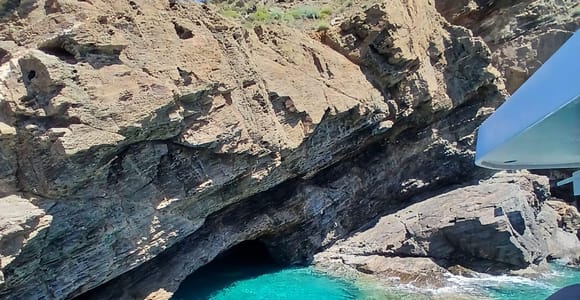
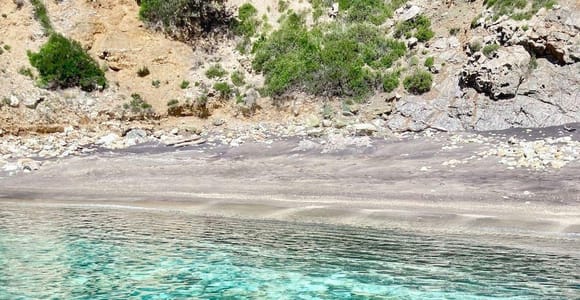
Elba Island: Guided boat tour to the Gemini Islands and the Mines
(33 reviews) from €56.05
Book on GetYourGuide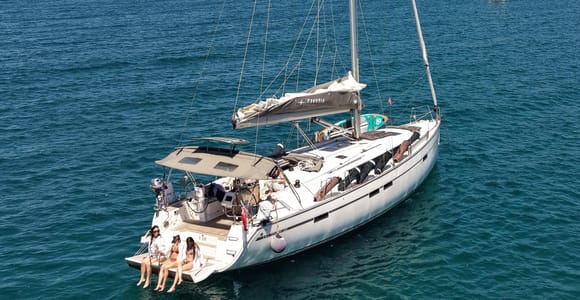
All Elba excursions on GetYourGuide
When to go
- January: not recommended or closed
- February: not recommended or closed
- March: not recommended or closed
- April: good
- May: best time
- June: best time
- July: good
- August: good
- September: best time
- October: good
- November: not recommended or closed
- December: not recommended or closed
best time good not recommended or closed
From early March to early November the Volterra museums open every day; in winter they close on Tuesdays, and the Roman theatre and acropolis only open at weekends. On Elba, May, June and September bring good sea weather and less traffic on the ferries; in July and August book your crossing if you're taking a car.
In Volterra the good season is long: from March to early November the museums open every day. In winter the museums close on Tuesdays, and the theatre and acropolis only open at weekends. On Elba, June and September are generally the best compromise between the sea and less crowded ferries; August is the busiest month.
Mistakes to avoid
- Looking for a train to Volterra: there isn't one, take the bus. And on Sundays only one bus leaves from Colle.
- Going to Volterra on a Tuesday in winter: the main museums are closed.
- Buying two single tickets when you want a third: with three sites, the Card costs less.
- Promising Twilight fans the film locations: they're in Montepulciano.
- Arriving in Piombino at the last minute with a car: boarding closes early.
- Turning up at the Palazzina dei Mulini on a Tuesday: it's the closing day.
Related pages
For the rest of the Tuscan coast, see Versilia and the Maremma. Close to Volterra is San Gimignano; further south is Siena. There are more ideas on the day trips page and the page on the borghi, Tuscany's hill towns and villages.