The short answer
The Consorzio del Vino Brunello di Montalcino is not a ticket office. It is the right way in for choosing wineries: its list of estates can be filtered to find those that welcome visitors, and from there you book with the producer. You won't find a basket, a tour or a package with transport. If you need one of those, you look elsewhere.
Who the Consorzio del Brunello is
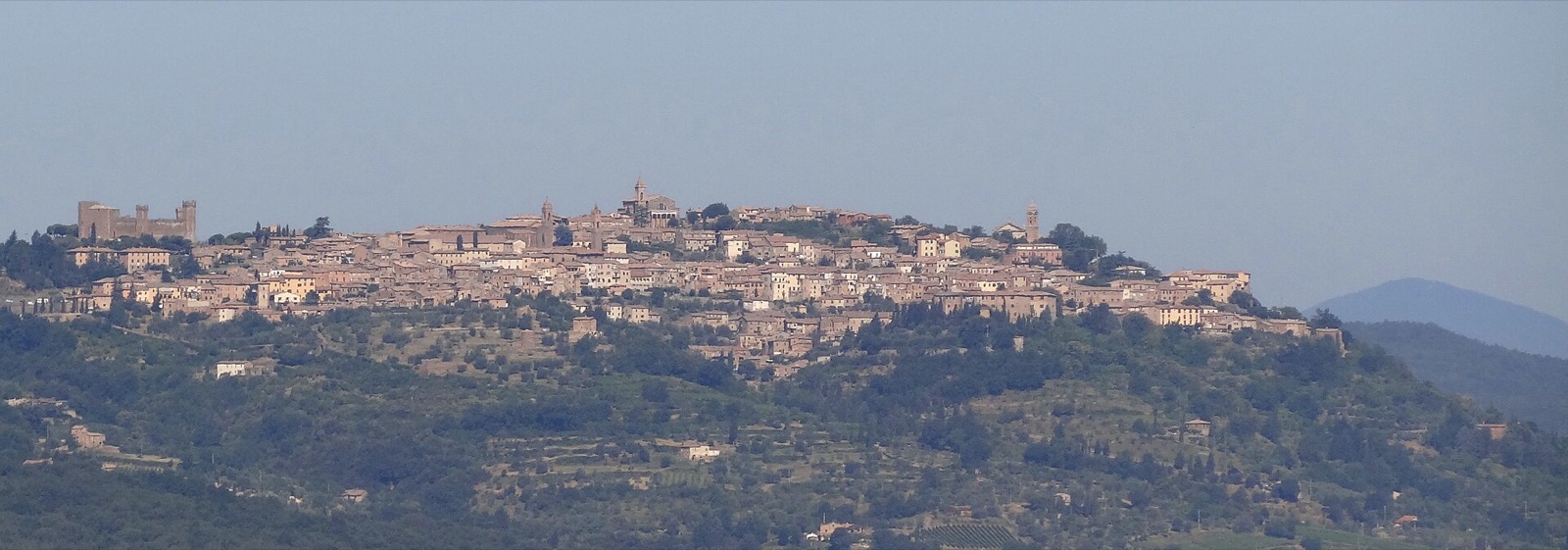
The Consorzio was founded in 1967 as a voluntary association of Montalcino's producers, and is based at Via Boldrini 10, in the centre of the town. It has just over two hundred members: sources vary between 214 and 219. It protects two things: a small appellation, about 2,100 hectares of vineyard registered as Brunello out of the municipality's 4,400, and a name that carries a great deal of weight on foreign markets. It checks that the production rules are respected and promotes the wine with its own events.
Montalcino is also one of the municipalities of the Val d'Orcia UNESCO site, so vineyards and landscape go together on a visit. The appellation covers the municipality of Montalcino, which since 2017 has also included the former municipality of San Giovanni d'Asso. Besides Brunello and Rosso, the area also produces Sant'Antimo DOC and Moscadello di Montalcino.
The Brunello rules, without the myths
The Consorzio is the most reliable source for understanding what you're drinking, and it's worth knowing the rules before you walk into a winery:
- Grape: 100% Sangiovese, known locally as "Brunello".
- Wood: at least 2 years in oak, then at least 4 months in bottle (6 for the Riserva).
- Release: not before 1 January of the fifth year after the harvest, the sixth for the Riserva.
- Bottling: compulsory within the area, in Bordeaux-style bottles only.
- Appellation: DOCG since 1980.
Rosso di Montalcino DOC is the same grape with shorter ageing: it can be released from 1 September of the year after the harvest. Anyone who says Brunello "spends 5 years in the barrel" is confusing ageing with the release date.
How to use the website to plan your visits
- Filter the list of estates for those open to visits.
- Choose by area: the municipality is large and the roads are hilly, so group nearby wineries together. Two visits in a day is already a good pace.
- Book directly with the winery, by email, by phone or on its website.
- Read the terms: each estate sets its own prices, length and refund policy. Some large Tuscan wineries charge in advance with no refund, others cancel free of charge until the day before.
In the town, the 14th-century Fortezza houses a wine shop with tastings; the courtyard is free, and for the ramparts unofficial sources give a ticket of around €4. It's a handy fallback if you haven't booked anything.
What to expect at a Montalcino winery
A typical visit includes a walk through the vineyard or the cellar and a tasting of several wines: often Rosso di Montalcino alongside Brunello, sometimes a Riserva or an older vintage for comparison. It's the best way to understand the difference between a wine to drink young and one that has spent years in wood and in bottle. There's often something to eat as well, pecorino or cured meats; formats with lunch cost more and need to be booked ahead.
Two practical rules. Under-18s can come in with their parents but can't taste: in Italy the minimum age for drinking and buying alcohol is 18. And if you want to take bottles home, ask whether the winery ships: in hot weather, leaving them in the car all day does the wine no good.
Consorzio events
Benvenuto Brunello is the preview of the new vintage, in Montalcino in the second half of November. It's designed mainly for the trade and journalists: interesting to know about, less useful if you're on holiday. Red Montalcino, in early October, takes place in Siena instead. For access and exact dates, check the official site.
When a Brunello wine tour beats the official channel
Montalcino sits high up, far from the railway lines, and bus route 114 from Siena has timetables built around the school day: few services, almost none on Sundays. Then there's the glass: after two or three tastings the 0.5 g/l limit is quickly exceeded, and drivers under 21 or who have held a licence for less than three years may not drink even a sip. If you really want to taste, you need a driver.
That's why, if you don't have a car or nobody wants to give up the wine, a tour with transport is the most sensible choice. On the partner platforms you'll find hour-and-a-half winery tastings in Montalcino, from €29 on GetYourGuide and from €32.50 on Tiqets, for those arriving under their own steam, and full days with lunch from Siena, which on GetYourGuide start from €190. Partner prices change over time and we check them periodically.
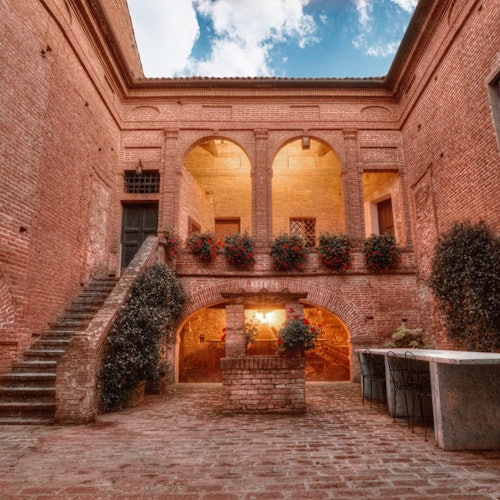
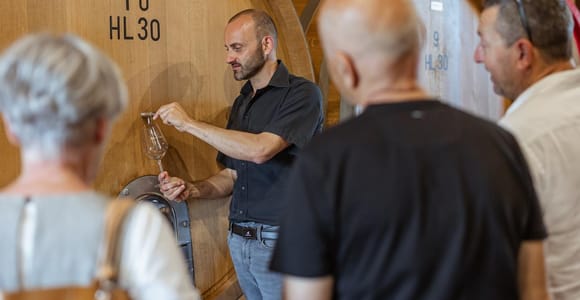
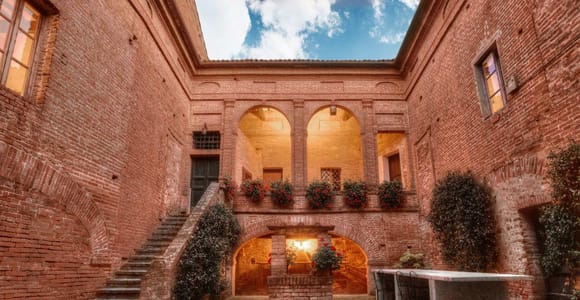
Montalcino: Brunello Wine Tasting & Lunch in a Tuscan Castle
(508 reviews) from €61.90
Book on GetYourGuide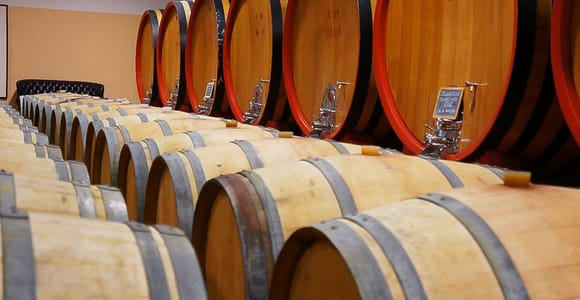
From Siena: Brunello di Montalcino Guided Wine Tour W/ Lunch
(441 reviews) from €190
Book on GetYourGuideWith a tour, though, you give up the choice: if you have specific producers in mind, go back to the Consorzio's list and put someone who isn't drinking behind the wheel. From Florence, a day in Montalcino is a long one: start from Siena or stay overnight in the Val d'Orcia, if you can.
Who the Consorzio is useful for
For visitors based in the Val d'Orcia, getting around by car and wanting to decide for themselves which wineries to visit. If you're looking for times, transport and payment in a single step, you won't find it here: selling visits isn't the Consorzio's job.
Further reading
Montalcino is a stop in the Val d'Orcia: there you'll find Pienza, the abbeys and the scenic roads. To compare tours with tastings, see the page on wine tours, and for the villages of the area, the guide to Tuscany's borghi, its hill towns and villages.
For the other great appellation, read the guide to the Consorzio Vino Chianti Classico. On the platforms that sell tours to Montalcino: Tiqets and GetYourGuide.