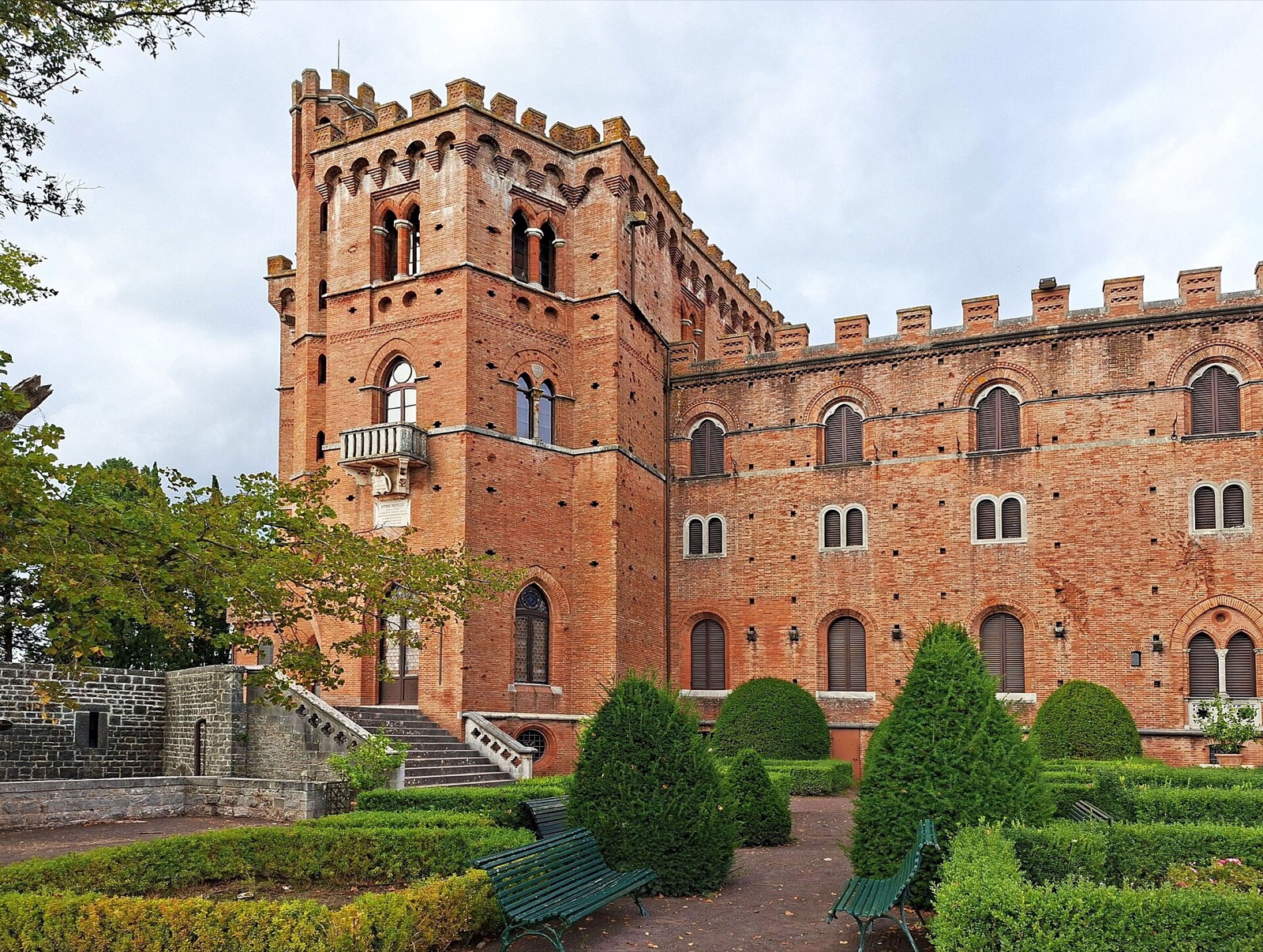
The Consorzio Chianti Classico: what it does and what it doesn't
The Consorzio Vino Chianti Classico was founded in Radda on 14 May 1924 by 33 producers, and describes itself as the first wine consortium in Italy. The date 1716, which you'll often see quoted, is the year of Cosimo III's decree that fixed the boundaries of the area, not the founding date. The Black Rooster (Gallo Nero) comes from the old Chianti League; the tale of the two horsemen and the hungry rooster is a legend, one the Consorzio itself is happy to tell.
Today it brings together 480 producers, 342 of whom bottle their own wine, across about 70,000 hectares: the whole municipalities of Castellina, Gaiole, Greve and Radda, plus parts of Barberino Tavarnelle, Castelnuovo Berardenga, Poggibonsi and San Casciano. Its headquarters are at Via Sangallo 41, in the locality of Sambuca, Barberino Tavarnelle.
The first thing to know: the Consorzio does not sell visits or tastings. It protects the appellation, enforces the rules, organises events and points you towards the wineries. The "ticket" is something you buy from the estate.
How to use the official channel to plan your visits
The most effective approach has three steps.
- Pick your wineries from the official list of estates on the Consorzio's website: you'll find the producers of the appellation, large and small.
- Book with the Chianti Classico Card, the experiences platform linked to the Consorzio, or on each winery's own website. On the Card, for example, you'll find Verrazzano's tour with lunch, about 3 hours, and a 45-minute tasting at Barone Ricasoli.
- Read the individual estate's terms. At Antinori, in Bargino, the Tinaia Tour costs €50 per person, is paid when you book and is non-refundable. At Verrazzano cancellation is free until the day before, after which you pay 20%.
As a rough guide, a visit with 3 or 4 wines and something to eat generally costs between €20 and €60 per person; formats with lunch cost more. Under-18s can go into the winery but can't taste.
Casa Chianti Classico in Radda
In the former convent of Santa Maria al Prato, in Radda, is Casa Chianti Classico, the appellation's visitor centre. It is run by private operators, not by the Consorzio, and has a clear price list:
| Experience | Price |
|---|---|
| Sensory tour | €10 |
| 3-wine tasting | €40 |
| Seminar tasting | €60 |
| Lunch | €60 |
| Vineyard trek (Wed–Fri) | €95 |
It's a good starting point if you want to understand the difference between Annata, Riserva and Gran Selezione before touring the wineries. Keep an eye on the wine shop's hours: at our last check it opened only on Friday and Saturday from 18:00 to 20:00.
The Chianti Classico rules in one table
The Consorzio is the right source for understanding what's in your glass:
| Type | Sangiovese | Minimum ageing | Minimum alcohol |
|---|---|---|---|
| Annata | at least 80% | 12 months | 12% |
| Riserva | at least 80% | 24 months, 3 of them in bottle | 12.5% |
| Gran Selezione | at least 90% | 30 months, 3 of them in bottle | 13% |
Gran Selezione, introduced in 2014, uses only the estate's own grapes, and it alone may show one of the 11 UGAs on the label, the sub-zones such as Panzano, Lamole or Radda. The 90% rule, with only native grape varieties for the rest, is a recent change still being phased in: less up-to-date articles still give 80%. And remember that "Chianti" and "Chianti Classico" are two different appellations: the Black Rooster appears only on bottles of Classico.
Among the events, the Chianti Classico Collection is held in February at the Stazione Leopolda in Florence; the Consorzio also promotes the Granfondo del Gallo Nero, a cycling race on the roads of the appellation.
When a Chianti wine tour from Florence is the better choice
The official channel assumes you have a car. From Florence the 365 bus reaches Greve in about 50–60 minutes, with few services on public holidays, and it doesn't link the wineries to one another. Then there's the wine: in Italy the drink-driving limit is 0.5 g/l, and zero for drivers under 21 or who have held a licence for less than three years.
That's why, if you're leaving from Florence and want to see two or three wineries, a tour with transport often makes more sense. Tiqets sells a guided visit with a tasting from €45, and GetYourGuide its most-reviewed winery tour from €49.50 and a small-group tour from €89. These are partner prices, which change, and we keep them up to date.

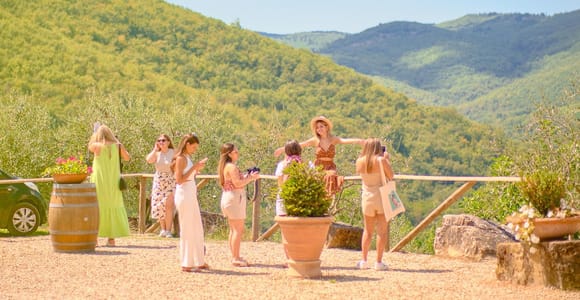
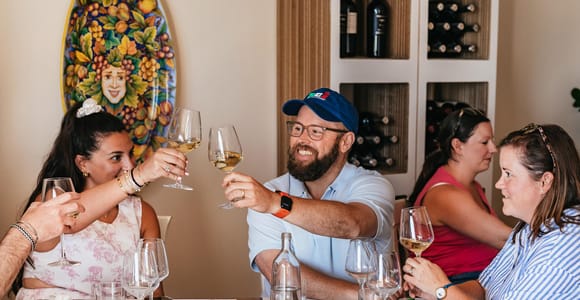
From Florence: Small Group Wine Tasting Tour to Tuscany
(4,594 reviews) from €89
Book on GetYourGuideThe flip side: on a tour you don't choose the wineries, and they are often estates used to groups. If wine is the main reason for your trip, hire a car with a sober driver and book your visits through the official channel.
When the Consorzio's website is enough
It's enough for visitors travelling by car, staying in Chianti and wanting to put their visits together at their own pace, perhaps one large estate and one family-run one. It's of little use if you're looking for a ready-made package from Florence: you won't find departure times or a single basket there.
Related pages and reviews
For the area, its villages and its roads, read the guide to Chianti; to choose between tours from Florence, there's the page on wine tours. By bike or Vespa, see cycling and Vespa tours in Tuscany.
For Tuscany's other great red, read the guide to the Consorzio del Brunello di Montalcino. On tours from Florence, compare the reviews of Tiqets and GetYourGuide.